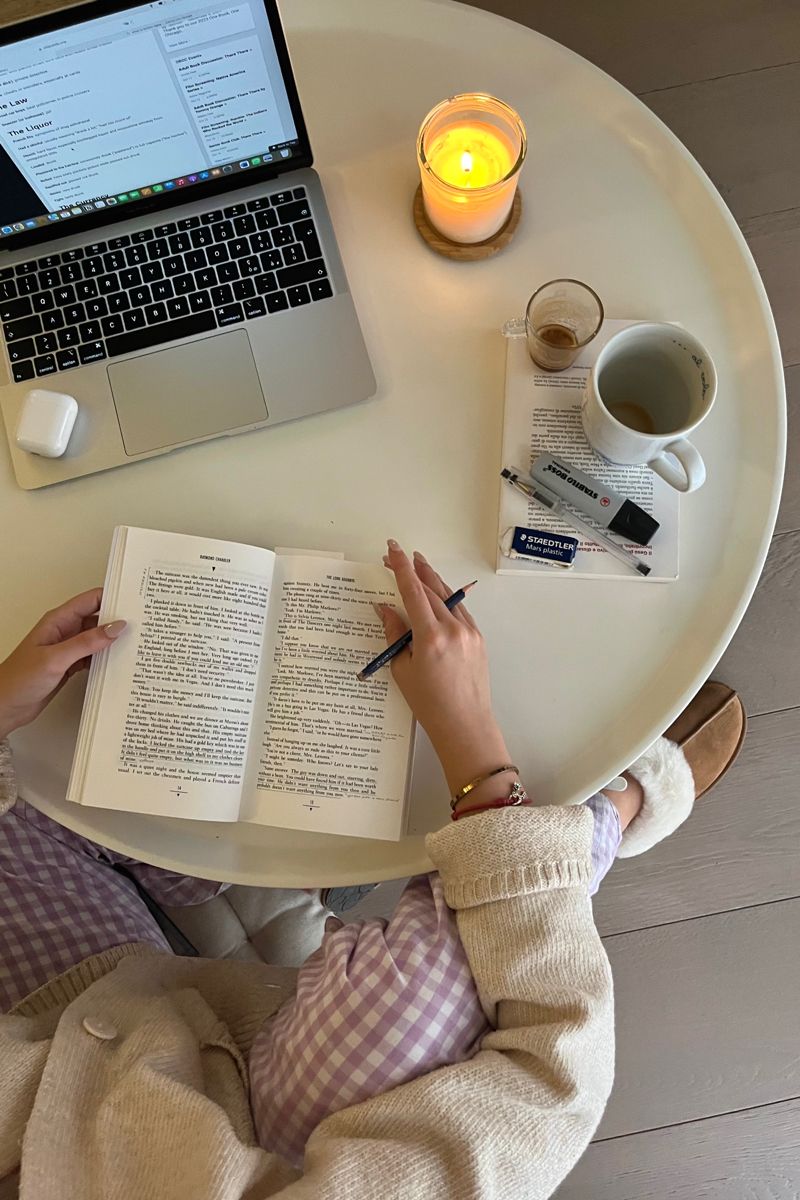
The Power of Intentional Pauses in a Hyperconnected World

Technology researcher Linda Stone coined the term continuous partial attention in 1998, while working at Microsoft Research. She distinguished it from multitasking: multitasking is doing several things to be more productive. Continuous partial attention is keeping a peripheral awareness of everything — scanning for what might be more important — driven not by productivity, but by a desire not to miss anything. The result is a nervous system in a state of permanent low-grade alert, never fully present, never fully off.
Twenty-eight years later, the condition has become so normalised that we have forgotten it is a condition. We eat while scrolling. We walk while listening. We pause the show to check Twitter. We end each day with the vague, exhausted feeling that we were busy all day but somehow did not arrive anywhere.
The intentional pause is the antidote — not as a productivity strategy, but as a recovery of presence.
The Ultradian Rhythm: Why Your Brain Demands Pauses
Your brain does not sustain focused attention continuously. Sleep researcher Dr. Peretz Lavie and chronobiologist Nathaniel Kleitman identified ultradian rhythms — approximately 90-minute cycles of higher and lower alertness that run throughout the day, mirroring the 90-minute sleep cycles you experience at night.
At the end of each 90-minute cycle, the brain enters a brief trough — a 15-to-20-minute window of lower arousal. In healthy, pre-industrial patterns, humans used this trough for rest: a short walk, a moment of stillness, a light meal. In modern knowledge work, we override this window with caffeine, urgency, and screen stimulation. The result is cumulative cognitive depletion that no amount of weekend sleep fully repairs.
Research from the attention and concentration lab at Ben-Gurion University of the Negev (Ariga & Lleras, 2011, Cognition) found that brief mental breaks maintain focus over long tasks — participants who took short breaks showed no performance decline over 50 minutes, while those who worked continuously deteriorated significantly.
Intentional pauses, timed to these ultradian troughs, are not laziness. They are biological hygiene.
Four Types of Intentional Pause
| Pause Type | Duration | What It Does | When to Use |
|---|---|---|---|
| Micro-pause | 30 seconds – 2 minutes | Interrupts autopilot, resets attention | Before sending an email, entering a meeting, making a decision |
| Transition pause | 3 – 5 minutes | Creates psychological boundary between contexts | Between work tasks, arriving home, moving between meetings |
| Ultradian break | 15 – 20 minutes | Allows brain to complete its rest trough | Every 90 minutes of sustained focus |
| Unstructured pause | Open-ended | Activates Default Mode Network (creative integration) | Weekends, evenings — time with no planned output |
Attention Restoration Theory and the Pause
Environmental psychologists Rachel and Stephen Kaplan at the University of Michigan developed Attention Restoration Theory (ART), which identifies two types of attentional capacity: directed attention (effortful focus on a task) and involuntary attention (effortless fascination with natural stimuli like clouds, water, or birdsong).
Directed attention depletes. Involuntary attention restores it. The Kaplans found that environments with "soft fascination" — which engage involuntary attention without requiring directed attention — are uniquely restorative. A view of trees, the sound of rain, a walk through a park: these restore directed attention capacity in a way that more stimulating environments (social media, television, conversation) cannot.
The practical implication: the most restorative pauses are those that involve natural, low-demand stimuli. A five-minute walk outside without headphones outperforms a five-minute social media break in every measurable attentional outcome.
The STOP Technique
The STOP technique, drawn from Mindfulness-Based Stress Reduction (MBSR) developed by Dr. Jon Kabat-Zinn at the University of Massachusetts Medical School, provides a four-step micro-pause that can be executed anywhere, in under two minutes:
- S — Stop. Physically pause whatever you are doing. Put down your phone. Stop typing. Let the task hang.
- T — Take a breath. One conscious breath. Notice the sensation of inhaling and exhaling. This activates the parasympathetic nervous system and signals the body that there is no emergency.
- O — Observe. Without judgment, notice what you are experiencing — physically, emotionally, mentally. Are your shoulders raised? Is your jaw clenched? Is the thought "I don't have time for this" already forming?
- P — Proceed with awareness. Return to what you were doing, or choose differently. The pause does not mandate a change of action — it mandates a change of relationship to the action.
The power of STOP is in the "O." Most people move directly from S to P — they pause, breathe, and return to exactly the same state of mind they left. The Observe step is what creates choice. You cannot change a pattern you cannot see.
Building Pause Architecture Into Your Day
Intentional pauses work best when they are scheduled rather than improvised. The research on habit formation consistently shows that behaviour linked to existing cues (implementation intentions) is far more likely to occur than behaviour dependent on in-the-moment motivation.
Three structural interventions:
- The pre-send pause: Before hitting send on any email or message, stop for 10 seconds. Read it once more. Ask: is this the response I would send from a calm, resourced place? This single habit reduces reactive communication significantly.
- The meeting bookend: Schedule 5 minutes before and after every meeting. The before-meeting pause is for entering with intention. The after-meeting pause is for processing and releasing — preventing the residue of one conversation from contaminating the next.
- The 90-minute alert: Set a recurring reminder every 90 minutes during your working day. When it fires, take 10-15 minutes away from screens. Walk, stretch, look out the window. Treat this as non-negotiable as a fire alarm — because for your prefrontal cortex, it effectively is.
The hyperconnected world will not slow down to accommodate your need for presence. The pause must be built deliberately, protected actively, and chosen repeatedly — not as an escape from the world, but as the practice that allows you to meet it fully. For deeper work on reclaiming attention, explore the mindful commuting practices and the research on designing your rest environment.
"Nowhere can man find a quieter or more untroubled retreat than in his own soul." — Marcus Aurelius, Meditations