Somatic Practices for Daily Stress Relief
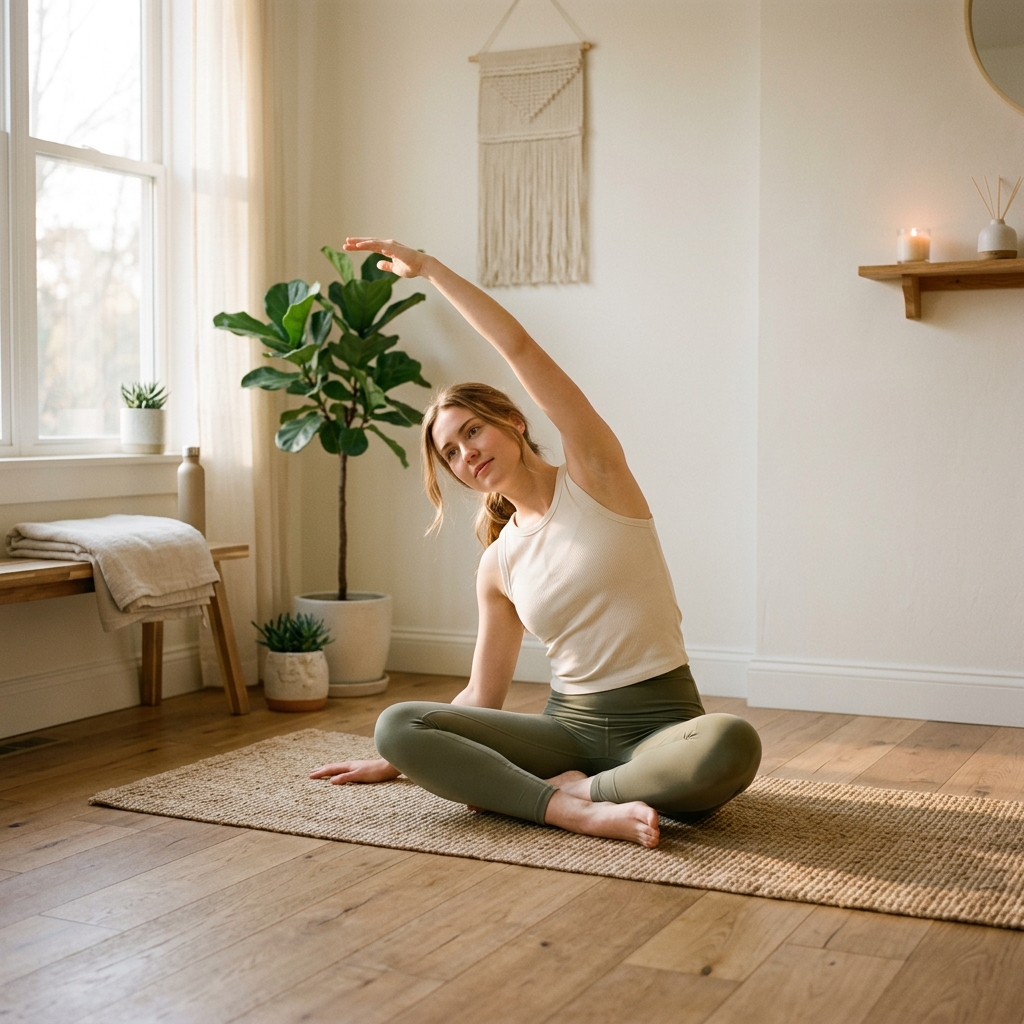
When we feel stressed or anxious, our first instinct is usually to try and solve the problem with our minds. We analyze, we rationalize, we ruminate. But stress is not just a cognitive event—it is a deeply physical one. Your nervous system is flooded with adrenaline, your muscles are tense, and your breathing is shallow.
Trying to talk yourself out of a stressed nervous system is like trying to turn off a fire alarm by arguing with it. To calm the mind, you must first calm the body. This is the foundation of somatic practices.
What Does Somatic Mean?
The word "somatic" comes from the Greek word soma, meaning the living body in its wholeness. Somatic practices focus on the internal experience of the body, rather than external appearance or performance. They are techniques designed to help you drop out of your racing mind and back into your physical sensations.
3 Simple Somatic Practices
You don't need to be a yogi to practice somatic awareness. These three techniques can be done anywhere, anytime.
| Practice | How to Do It | When to Use It |
|---|---|---|
| The Physiological Sigh | Two quick inhales through the nose, followed by a long, slow exhale through the mouth. Repeat 3 times. | In moments of acute, sudden stress or panic. |
| Body Tapping | Gently tap your chest, arms, and legs with your fingertips or cupped hands. | When you feel numb, dissociated, or lethargic. |
| Grounding (5-4-3-2-1) | Name 5 things you see, 4 you can touch, 3 you can hear, 2 you can smell, 1 you can taste. | When your mind is spiraling into future worries. |
The Psoas Muscle and Stress
The psoas (pronounced so-as) is a deep core muscle that connects your spine to your legs. It is often called the "muscle of the soul" because it is intimately connected to our fight-or-flight response. When we are stressed, or when we sit at a desk all day, the psoas becomes chronically tight.
Gentle somatic movements, like lying on your back with your knees bent and feet flat on the floor (the constructive rest position), allow gravity to naturally release the psoas. Spending 10 minutes in this position can profoundly down-regulate the nervous system.
"The body keeps the score. The body's story must be told before healing can begin." — Bessel van der Kolk MD, The Body Keeps the Score
Conclusion: Reconnecting
The next time you feel overwhelmed, before you try to figure out a solution, pause. Feel your feet on the floor. Take a physiological sigh. Address the physical stress response first. The Hvile app features guided somatic body scans designed to help you bridge the gap between your mind and your physical experience.